Better-For-You, Better for Them: Lunchbox Snacks Kids Love and Parents Trust
A “better for you” lunchbox snack is a conversation that’s happening between parents and kids every morning. Parents want snack choices that are better for their children than junk food and children want snacks that taste good and feel fun to eat. That means finding the right balance of a fun snack that supports growing kids, provides steady energy, and fits into hectic weekday routines.
Crunchmaster snacks fit naturally into this conversation because they combine crunch, versatility, and whole grain ingredients in easy-to-pack formats. Products like Crunchmaster Multi-Pack Crisps, Multi-Seed Original Crisps, and Variety Pack Crisps provide parents with flexible snack bases that can be paired with proteins, fruits, vegetables, and dips to build balanced lunchbox combinations. These snack pairings help fuel growing kids and fit seamlessly into busy weekday meal prep routines while being bite-sized and big on taste.
Understanding Better-For-You Snacks for Kids’ Lunchboxes
Parents want to fill lunchboxes with foods that are low sugar, lower fat, and nutrient-dense, but it can be hard to separate truly balanced snacks from products that just use health-focused marketing language.
That’s why ingredient transparency matters. Better-for-you lunchbox snacks often focus on whole grains, seeds, fiber, protein, and better fats. They keep ingredient lists straightforward and easy to recognize.
Crunchmaster snacks are made with ingredients such as brown rice flour, sesame seeds, quinoa, flax, and olive oil. These nutrition-forward ingredients and transparency around what’s really in your food help families complete a lunchbox full of what kids are excited to eat.
Ingredients Parents Trust: Simple and Recognizable
Simple ingredient lists help build confidence for busy families. That means looking at packaging with recognizable ingredients such as whole grains, seeds, fruits, and straightforward seasonings instead of long lists of unfamiliar additives.
Parents can look for ingredients like:
- Whole grains, including oats, quinoa, and brown rice
- Seeds such as flax and sesame
- Better fats like olive oil and avocado
- Whole fruits packed in water or juice
- Protein-rich foods, including yogurt, hummus, beans, and cheese
Along with being built on whole grains and seeds themselves, Crunchmaster crackers and crisps are designed to work as easy snack foundations for other ingredients. For example, Crunchmaster Multi-seed Ultimate Everything Crackers pair well with hummus, sliced cucumbers, turkey, or avocado to create satisfying lunchbox combinations with crunch and flavor. And even more recipes for building health-forward snacks can be found on Crunchmaster’s recipe pages.
Key Nutritional Priorities for Healthy Kids’ Snacks
Protein and fiber are especially important because they can help children stay satisfied between meals. Harvard T.H. Chan School of Public Health nutrition experts recommend combining carbohydrates with protein and better-for-you fats for more balanced snacks. [1] [2]
Crunchmaster Multi-Seed Rosemary & Olive Oil Crackers with hummus or cheese is one simple example of a snack that includes crunch, protein, and satisfying fats. Hummus and Crunchmaster crackers make a fiber-filled snack that supports both kids’ and adults’ nutrition needs. [3]
Along with macronutrients (protein, carbohydrates, and fats), vitamins and minerals like vitamin D, calcium, iron, and vitamin C are important in a daily diet. [4] These daily requirements also come in part from snacks, such as the calcium and iron in the Rosemary & Olive Oil Crackers and the vitamin D in cheese. Include a few orange slices or a tangerine in the lunchbox for added Vitamin C.
While no single snack needs to “do it all” in terms of nutrition, balanced lunchboxes can combine multiple foods to help support nutrient variety throughout the day.
The Role of Better Fats and Olive Oil in Kids’ Snacks
Better fats are mostly unsaturated fats found in foods like olive oil, avocados, nuts, and seeds. These fats can help children feel satisfied between meals and support balanced eating habits. [5]
Olive oil is one practical ingredient families can use in lunchbox recipes and snack pairings. These include Crunchmaster Multi-Seed Original, that are made with olive oil and pairs naturally with Mediterranean-inspired ingredients.
Families can add olive oil to lunchboxes by:
- Tossing pasta salad with olive oil and herbs
- Making homemade hummus
- Drizzling olive oil on flatbread or vegetables
- Creating quick vinaigrettes for veggie dip cups
Pairing crunchy crackers with dips and spreads creates satisfying texture while helping families include more whole grains and better fats in everyday snacks. An option like Crunchmaster Multi-Grain Mexican Street Corn Crackers makes for a snack that pairs well with guacamole, salsa, or black bean dips.
Combining Nutrition with Kid-Friendly Flavors and Formats
Even the most nutrient-dense snack does not help if kids refuse to eat it. Research shows many parents identify picky eating as one of their biggest lunchbox challenges. [6] [7] Convenience and food costs also affect how families plan snacks and lunches throughout the week. [8]
Fun formats can make balanced foods more appealing. Snack boards, cracker stacks, mini sandwiches, and dip cups create a more interactive eating experience for children. Crunchmaster products work well for:
- Crackers with hummus cups
- Crisps in a mix with nuts, raisins, and other dried fruits
- Mini cracker sandwiches with cheese and cucumber
- Turkey and avocado cracker stacks
Parents may also benefit from keeping lunchbox choices simple. Experts suggest rotating in a few familiar favorites while introducing one new item at a time to avoid overwhelming picky eaters. [9] For example, for children who enjoy popcorn, parents might try Crunchmaster Multi-Grain Aged White Cheddar to add 20 grams of whole grain per serving and a familiar great taste to their child’s lunchbox.
Practical Tips for Packing Balanced and Appealing Lunchboxes
Balanced lunchboxes do not need to be complicated. A simple framework can make packing easier during busy mornings:
- Choose a protein like yogurt, cheese, eggs, hummus, or turkey
- Add a carbohydrate, such as whole grain crackers
- Include fruits or vegetables
- Add a better-for-you fat like avocado or nuts if school-safe
- Pack water instead of sugary drinks
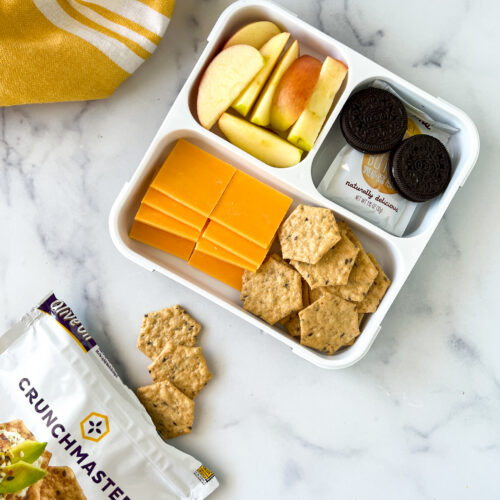
Bento-style lunchboxes can help organize portions and encourage variety. These included compartments perfect for crackers, fruit, vegetables, and dips that allow children to easily see their options.
Supporting Parents and Children Through Positive Snack Habits
Positive, low-pressure approaches can help children develop healthier long-term relationships with food. Families can focus on gradual exposure, flexible choices, and involvement in meal preparation to help encourage varied and nutritional eating. [9]
Helpful strategies include:
- Letting kids choose between two or three balanced options
- Preparing snacks together on weekends
- Using lunchbox checklists, children can help complete
- Pairing new foods with familiar favorites
- Encouraging children to help build cracker stacks and snack boards
Crunchmaster products provide versatile crunch-forward options that can fit into many snack combinations, helping families create lunchboxes that feel practical, fun, and approachable.
Crunch, Balance, and Better Lunchbox Moments
Better-for-you lunchbox snacks do not need to feel restrictive or complicated. Families can focus on simple goals like adding more whole grains, balancing snacks with protein and fiber, and choosing recognizable ingredients children enjoy eating. Small changes, such as pairing crackers with hummus or adding fruit alongside crunchy snacks, can make lunchboxes feel more balanced and satisfying.
Crunchmaster crackers and crisps make it easier to build lunchbox combinations that work for both parents and kids. These crunchy snack options provide a versatile base for creative pairings, balanced eating habits, and enjoyable snack moments throughout the school week.
Frequently Asked Questions
Parents can reduce waste by offering two or three balanced options, pairing familiar foods with one new item, and using interactive formats like dips, cracker stacks, and snack boards. [9]
Simple portions and compartment-style lunchboxes can help children feel less overwhelmed while encouraging variety and reducing waste.
Children may be more willing to try new foods when they help shop, prep, or pack lunches and when new foods are introduced alongside familiar favorites without pressure. [9]
References
[1] Harvard T.H. Chan School of Public Health. Smart Snack Strategies.
https://www.health.harvard.edu/heart-health/smart-snack-strategies
[2] Harvard T.H. Chan School of Public Health. Kids Health Eating Plate.
https://nutritionsource.hsph.harvard.edu/kids-healthy-eating-plate/
[3] American Academy of Pediatrics. Fiber: What Parents Need to Know.
https://doi.org/10.1542/peo_document607