Why are Crunchmaster Crackers “Japanese Style” Rice Crackers?
Crunchmaster has been baking rice crackers using a traditional Japanese-style baking method for more than 20 years. But what does “Japanese style” mean? It comes from a baking technique called Usuyaki that helps create Crunchmaster’s signature thin, light, and satisfyingly crunchy crackers and crisps.
For two decades, Crunchmaster has been crafting gluten-free snacks made with recognizable ingredients and plenty of crunch. Whether you enjoy your crackers straight from the bag, with a favorite dip, or as part of a snack board, understanding the Japanese inspiration behind Crunchmaster can make each bite even more interesting. Here, we take a closer look at the tradition, ingredients, and baking method behind these crunchy favorites.
What Does “Japanese Style” Mean for Crunchmaster Crackers?
The term “Japanese-style” rice crackers describes crackers baked using the Usuyaki method, a Japanese thin-baking technique that creates a delicate, evenly baked texture. [1] For Crunchmaster, it’s this technique that brings snack-lovers the crisp texture they enjoy, along with familiar, better-for-you ingredients like brown rice, whole grains, seeds, and more.
Crunchmaster crackers start with rice grown in the U.S. and other quality ingredients sourced globally. Then Crunchmaster brings those better-for-you ingredients together through the traditional Japanese Usuyaki baking method, where seeds and grains are spread and baked thinly and evenly. [1] This creates Crunchmaster’s signature crunch and its well-loved snacks, like Crunchmaster Multi-Seed Original, which brings together brown rice flour, sesame seeds, tamari seasoning, and seeds in a thin, crisp cracker.
How Crunchmaster Incorporates Traditional Japanese Rice Cracker Techniques
Japanese rice crackers are part of a broader category often called beika, or rice-based confectionery and snacks. Three familiar types include:
- Senbei – generally made with non-glutinous rice;
- Okaki – traditionally made with glutinous rice;
- Arare – also made with glutinous rice and usually smaller than okaki. [2] [3] [4]
Senbei are among the best-known Japanese rice crackers and are often associated with crisp textures and savory seasonings such as shrimp, salt, and sesame. [2] [4] Crunchmaster’s Multi-Seed Original shares some of these flavors and ingredient cues through its brown rice flour, sesame seeds, and tamari soy sauce powder, while its Usuyaki-inspired process gives the cracker its crunchy texture.
| Element | Traditional Senbei | Crunchmaster Japanese-Style |
| Base | Uruchi rice, or non-glutinous rice | Brown rice flour |
| Seasoning | Soy sauce, seaweed, sesame, salt, and other seasonings | Tamari seasoning, sesame seeds, and other seasonings |
| Method | Often baked or grilled; thin styles may use Usuyaki | Usuyaki-inspired baking |
| Texture | Crisp, with texture varying by style | Thin, light, and crunchy |
Ingredients That Define Crunchmaster’s Japanese-Style Rice Crackers
The ingredient list is one of the easiest ways to see the Japanese inspiration in Crunchmaster’s crackers. Multi-Seed Original starts with brown rice flour and includes sesame seeds and tamari soy sauce powder, while flax seeds, amaranth seeds, and quinoa add extra texture and variety to the bite.
Crunchmaster also uses olive oil in its Multi-Seed and Multi-Grain crackers, while some newer products use avocado oil. For example, Avocado Toast Salt & Pepper is made with avocado oil and avocado powder, while retaining the Crunchmaster Usuyaki baking approach.
All Crunchmaster crackers and crisps are also Non-GMO Project Verified, gluten free, and made with better-for-you ingredients with hearty crunch and your snack-time satisfaction in mind.
The Usuyaki-Inspired Baking Method Behind Crunchmaster Crackers
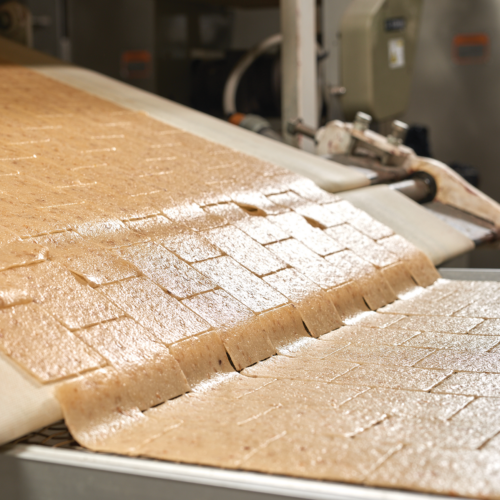
Usuyaki is a Japanese term associated with cooking something “thinly baked” or “thinly grilled,” producing a delicate, paper-thin result. Crunchmaster uses an Usuyaki process in which grains and seeds are spread into a thin, even layer and baked to create a light, crisp texture with the distinctive crunch the brand is known for.
The Crunchmaster process starts with brown rice and adds ingredients such as seeds and grains evenly in a thin layer. Then the mixture is dried to a precise moisture level and baked. Crunchmaster crackers are baked, not fried. This careful process helps produce the thin, even texture found in all varieties of Crunchmaster crackers and crisps.
The result is a cracker that feels delicate without losing its satisfying snap. That baked texture also gives Crunchmaster plenty of versatility, whether you are pairing the crackers with cheese and spreads, serving them with dip, or enjoying them on their own.
How Crunchmaster Adapts Japanese-Style Crackers for Gluten-Free and Allergen-Friendly Snacking
Crunchmaster crackers and crisps are Certified Gluten Free. This means that their products have third-party certification that includes review of ingredients, facility audits, and testing requirements. [1] [5]
Crunchmaster products are also certified Kosher dairy, packed with whole grains, and Non-GMO Project Verified. This third-party verification means that there are no genetically modified organisms (GMOs) ingredients used in the making of Crunchmaster products. [1] [6]
Crunchmaster Product Highlights
- Certified Gluten-Free
- Kosher certified
- Non-GMO Project Verified
- Made with recognizable grains, seeds, and oils
- Baked with rather than fried using the Usuyaki method
Where to Buy Crunchmaster Japanese-Style Rice Crackers
Crunchmaster Japanese-style rice crackers are available nationwide at many major grocery retailers, often in the specialty cracker aisle or near the deli section. To find a store near you, visit Crunchmaster’s “Where to Buy” page.
Conclusion: From Japanese-Inspired Technique to Your Go-To Crunch
Crunchmaster’s “Japanese style” is rooted in the way its crackers are made, using the Usuyaki baking technique to create thin, evenly baked crackers. Crunchmaster combines this approach with better-for-you, recognizable ingredients like brown rice, seeds, olive oil, and other ingredients to create a modern, crunchy gluten-free snack.
That blend of tradition and modern snacking is what makes the story behind Crunchmaster especially easy to enjoy. From the savory crunch of Multi-Seed Original to newer options such as Avocado Toast Salt & Pepper, there are a variety of Crunchmaster crackers and crisps ready to bring the extra crunch to your snack time.
Frequently Asked Questions
“Japanese style” refers to Crunchmaster’s Usuyaki baking approach, which is based on a Japanese technique associated with thin baking. Crunchmaster combines that approach with better-for-you ingredients like whole grains and seeds to make your snack time more memorable.
Crunchmaster cracker products are baked in the USA, with U.S. grown rice and other globally sourced ingredients. [7] Crunchmaster’s crackers are created using the Japanese-style baking method, Usuyaki, to create thin, crunchy snacks with recognizable ingredients you can see, like whole grains and seeds.
Crunchmaster uses the Usuyaki baking process that spreads grains and seeds into a thin, even layer before baking. This Japanese-inspired method helps create the signature light and crispy texture and crunch of its crackers and crisps.
Crunchmaster crackers are sold at many major retailers nationwide, and can often be found in the specialty cracker aisle or near the deli section. You can also use the Crunchmaster “Where to Buy” page to look for retailers in your area.
Some Crunchmaster crackers contain sesame and soy, including the tamari soy sauce powder found in the Multi-Seed Original variety. Always read the current package label for the most accurate allergen information. All Crunchmaster products are gluten-free.
References
[1] Crunchmaster. Our Difference. https://crunchmaster.com/our-story/crunch-quality/
[2] Gurunavi. Types of Senbei. https://gurunavi.com/en/japanfoodie/2017/04/different-types-of-senbei.html
[3] Senbei Atlas. Senbei vs Okaki vs Arare. https://senbei-japan.com/difference-between-senbei-okaki-arare/
[4] Epicurious. How This 1,000-Year-Old Japanese Snack is Made Today [Senbei]. https://www.youtube.com/watch?v=uAR4op5Vx4c
[5] Gluten-Free Certification Organization (GFCO). The Leader in Gluten-Free Certification. https://gfco.org/
[6] Non-GMO Project. What is Non-GMO Project Verified? https://www.nongmoproject.org/butterfly-label/
[7] Crunchmaster. FAQs. https://crunchmaster.com/our-story/faqs/