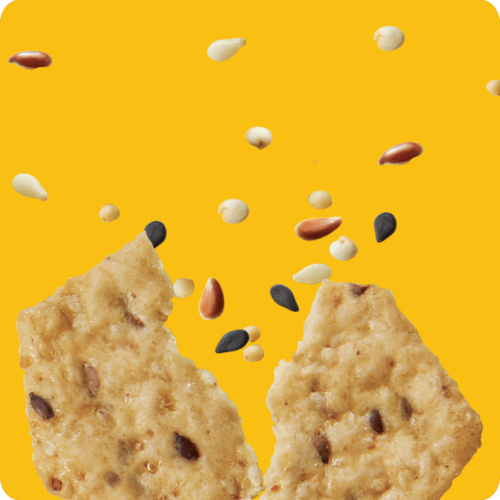
Maximum Crunch in Every Bite
What makes a cracker truly satisfying? It starts with texture, and the satisfying feeling of biting into that first crunch. Crunchmaster builds its crackers and crisps around that experience, using thoughtfully chosen grains, seeds, and a baking technique to create the kind of texture that gives snack time its crunch.
Crunchmaster brings that crunch to a wide range of everyday moments, from afternoon snacking to an evening party and everything in between. Its baked rice crackers use an Usuyaki baking process that spreads grains and seeds into a thin, even layer before baking, helping create the signature texture and crunch of Crunchmaster snacks.
What makes a cracker crunchy?
Crunch is a multisensory texture created when a food is dense enough to require real bite force and produces a deep, resonant sound when broken. Crunchy foods are even different from crispy ones, as real crunchiness tends to feel firmer and needs more force to break into smaller pieces. [1]
Satisfaction from your snack’s crunch isn’t just in the texture. Research shows that the sounds created as the crunchy food breaks and is chewed can influence how people perceive texture.[2] That’s why we call crunch a true multisensory experience rather than just a feeling in your mouth.
Crunchmaster puts the importance of crunch right at the center of its process. It focuses on creating a distinctive bite through better-for-you ingredients, structure, and the distinctive Usuyaki baking process used for all its crackers and crisps.
Crunchmaster crackers for maximum crunch
Different crackers can deliver different kinds of crunch, so choosing the right one depends on the memorable snack moment you want to create. For example, Crunchmaster’s Multi-Seed Original brings a hearty, nutty bite from sesame, flax, amaranth, quinoa, and a gluten-free rice base, while Multi-Grain Sea Salt offers a lighter texture built from brown rice, whole-grain cornmeal, sesame, and other grains.
For something especially snackable, Multi-Seed Original Crisps are bite-sized and built around brown rice, sesame, flax, amaranth, and quinoa. Chickpea Tzatziki Crisps take a different approach, using chickpea flour and rice flour for a lighter, airy crunch with a savory seasoning.
| Product | Key Ingredients | Some Great Pairing Occasions |
| Multi-Seed | Brown rice, sesame, flax, amaranth, quinoa | Dips, spreads, snack boards |
| Multi-Grain | Brown rice, whole-grain cornmeal, sesame, flax, oat fiber | Cheese, spreads, everyday snacking |
| Chickpea | Rice flour, chickpea flour, potato starch, sesame | Dips, cheeses, on-the-go snacking |
| Crisps | Brown rice, sesame, flax, amaranth, quinoa | Lunchboxes, portioned snacks, topping soup |
Crunchmaster products are certified gluten-free, and some carry the Non-GMO Project Verified status. Across all of its crackers and crisps, Crunchmaster focuses on wholesome grains, seeds, and other better-for-you ingredients, creating an indulgent-feeling snack with a satisfying crunch.
Key factors affecting cracker crunchiness
Three simple factors help determine whether a cracker delivers a satisfying crunch or falls flat:
- Moisture content: Crackers need to be low in moisture to maintain a firm, brittle structure. When dry foods take on too much moisture, they can become softer and lose some of their characteristic crunch, which is why moisture control is important during baking and storage. [1]
- Ingredient density: Seeds, grains, rice, and starches each contribute to the structure of a cracker. Ingredients with different shapes and textures can create the fracture patterns and bite resistance that help make a cracker feel substantial.[1][3]
- Structural integrity: Thickness, layering, and the way ingredients are spread through the cracker all affect how much force is needed to break it. A consistent structure can help create a more predictable bite from one cracker to the next. [1][3]
Texture can also influence how fresh, flavorful, and satisfying a food feels. That is why Crunchmaster approaches crunch as something to build into the cracker from the beginning rather than something to add at the end.
How ingredient choices influence crunch
Crunchy texture can come from several sources, including batters, starch structures, and firm ingredients such as seeds and grains. The way these ingredients interact during baking helps determine whether the finished food feels light, dense, brittle, hearty, or airy. [4][5]
Crunchmaster uses a baked rice-cracker base in many products, then builds on it with ingredients such as sesame, flax, quinoa, and amaranth. For example, Multi-Seed Original crackers combine a gluten-free rice base with four types of seeds, giving it the hearty, nutty character associated with the selection of varieties in Crunchmaster’s Multi-Seed line.
Those seeds do more than add visible texture, too. They contribute to the audible bite and add nutritional value, which is another reason seed crackers with crunch can feel especially satisfying.
The role of cracker shape and structure
Shape can make a noticeable difference in how a snack breaks apart and how evenly that texture is experienced. The physical structure, fracture patterns, and the force needed to break a snack food all contribute to how people experience its crunch. [6]
Crunchmaster’s thin, flat crackers are baked using the Usuyaki process to spread grains and seeds into an even layer. This creates a consistent bite across the cracker and an equally consistent crunch.
Baking techniques that enhance crunch
Usuyaki is a Japanese term meaning “thinly baked” or “thinly grilled,” and Crunchmaster uses the idea as inspiration for its baking process. [7] This approach includes spreading grains and seeds into a thin, even layer before baking, creating a delicate structure with the signature crunch associated with its crackers. Baking in this way helps drive off moisture and transform the ingredients into a firm, fracture-ready structure that is known for crunch.
The goal is crunch consistency from the first cracker in the bag to the last. That focus on texture is part of what Crunchmaster means by high-quality crunch, where ingredient sourcing, baking, and cracker structure all work together.
Crunch and nutrition: finding the right balance
Maximum crunch does not automatically tell you whether a snack is nutritious. Crunchy foods fit into better-for-you eating patterns when they are made like Crunchmaster snacks. Crunchmaster makes certified gluten-free crackers and crisps, made with whole grains and other better-for-you ingredients.
When comparing crunchy crackers, look for:
- A short ingredient list that is easy to understand.
- Whole grains and seeds featured prominently in the ingredients.
- Certified gluten-free labeling when gluten-free eating is important to you.
- Better-for-you ingredients that fit your personal preferences and eating routine.
How to enjoy crunchy crackers best
Crunchmaster crackers are made to do more than sit beside a sandwich. Their texture makes them especially useful when you want to add contrast to creamy, soft, or spoonable foods, turning a simple snack into something with more layers of texture.
- Build a charcuterie board: Add Multi-Seed Original crackers alongside cheeses, fruit, vegetables, and spreads for a hearty base.
- Dip away: Try Multi-Grain Sea Salt with hummus, guacamole, or another favorite dip.
- Add crunch to soup: Use Multi-Seed Original Crisps as a topping or serve them alongside soups and stews.
- Snack straight from the bag: Keep a serving of Multi-Pack Crisps handy when you want a convenient crunchy snack.
Texture contrast can make soft foods feel more interesting because the mouth experiences different sensations in the same bite. Crunchy foods also require chewing, which releases those sensory cues such as sound and texture which influence the eating experience and feelings of satisfaction.[1][2]
For even more inspiration, explore the Crunchmaster recipe collection for ideas ranging from dips and charcuterie boards to appetizers and everyday snacks.
Conclusion: Crunch in every bite
A truly satisfying cracker has a memorable crunch. The best crunch is built on the relationship between better-for-you ingredients, structure, shape, and baking technique. These come together in Crunchmaster snacks to create a crunch you can hear, feel, and consistently enjoy. Whether you reach for the hearty bite of Multi-Seed Original, the lighter texture of Multi-Grain Sea Salt, or the convenient bite-sized crunch of Multi-Seed Original Crisps, there is an option for every snacking moment.
Frequently Asked Questions
It means the cracker is designed to deliver a consistent, satisfying crunch throughout the bite rather than a texture that changes from soft to hard. Crunchmaster connects that experience to its thin, even baking process and carefully selected better-for-you ingredients like grains and seeds, which all work together to create its signature texture and consistent, satisfying crunch.
Crunch engages more than one sense at the same time, including the sound of the food breaking, the force felt while biting, and the texture experienced in the mouth. Research has found that sound can influence how people perceive food texture, while texture research shows that crunch and crispness can play an important role in food satisfaction. [1][2][3]
Crunch alone does not determine nutrition, but crackers made with ingredients like whole grains and seeds can provide a satisfying texture alongside ingredients that may fit a better-for-you snacking routine.
Gluten-free crackers can deliver serious crunch through ingredients such as rice flour, starches, and seeds, along with careful baking that creates a low-moisture structure. Crunchmaster’s crackers are certified gluten-free and use the Usuyaki-baking process designed to create their signature satisfying crunch.
Store crackers in a cool, dry place and reseal the package promptly after opening. Moisture can soften dry crackers and reduce crispness, while airtight storage helps protect low-moisture foods such as crackers from moisture in the surrounding environment.
Crunchy crackers pair especially well with softer foods because the contrast creates a more interesting bite. Try Crunchmaster crackers and crisps with hummus, guacamole, cheese, creamy spreads, soups, or stews, or use them as a crunchy topping for dishes that need a little extra texture.
References
[1] Tunick, M. H., et al., 2013. Critical Evaluation of Crispy and Crunchy Textures: A Review. International Journal of Food Properties. https://www.tandfonline.com/doi/full/10.1080/10942912.2011.573116
[2] Endo, H. et al., 2016 The effect of a crunchy pseudo-chewing sound on perceived texture of softened foods. Physiology and Behavior. https://www.sciencedirect.com/science/article/pii/S0031938416303493
[3] Kim, E.H.-J., et al., 2012. Fundamental Fracture Properties Associated with Sensory Hardness of Brittle Solid Foods. Journal of Texture Studies. https://doi.org/10.1111/j.1745-4603.2011.00316.x
[4] Raj, A. S., et al., 2026. Dietary Fiber and Processing Interventions for Enhanced Batters and Final Baked Products: A Review. International Journal of Food Science. https://pmc.ncbi.nlm.nih.gov/articles/PMC13121568/
[5] Giannoutsos, K., et al., 2025. Quality Properties of Crackers Enriched with Composite Flours: Effect on Dough and Final Product. Applied Sciences. https://doi.org/10.3390/app152312361
[6] Aussanasuwannakul, A, & Kantrong H., 2026. Texture Phenotypes of Fiber-Enriched Extruded Snacks Revealed by Mechanical-Acoustic Analysis, Tribology, and Sensory Mapping. Foods. https://pmc.ncbi.nlm.nih.gov/articles/PMC13121568/
[7] Crunchmaster. High Quality Crunch. https://crunchmaster.com/our-story/crunch-quality/