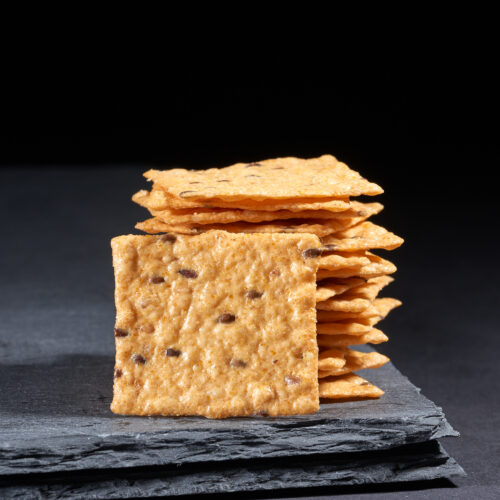
What Whole Grain Snacking Means To Us
Today’s snack lovers want foods that balance flavor, crunch, and ingredients they can recognize. Whole grain snacks have become an important part of those choices as they offer a simple way to add more whole grains into everyday eating habits.
Crunchmaster focuses on whole grains as the foundation of its crackers and crisps. Whole grain brown rice, seeds, and bold flavors are combined into crispy snacks that feel approachable and satisfying. With gluten-free snacks made with better-for-you ingredients, Crunchmaster helps snack lovers find options that fit a variety of dietary preferences without sacrificing crunch or flavor.
Crunchmaster’s Commitment to Whole Grain Ingredients
At Crunchmaster, whole grains are not an afterthought. They are the starting point for crackers and crisps. Whole grains help create the hearty texture and satisfying crunch that define the Crunchmaster snack experience.
A whole grain is a grain that contains all three original parts of the grain kernel: the bran, germ, and endosperm. Because all of the parts remain intact in whole grains, they retain their naturally occurring fiber, vitamins, and minerals. [1]
Many Crunchmaster products list whole grain ingredients first on the label. This is because Crunchmaster believes better-for-you snacking should begin with recognizable, thoughtfully selected ingredients.
Crunchmaster also recognizes that many shoppers are balancing multiple dietary needs at once. That’s why Crunchmaster snacks are certified gluten-free, kosher dairy, and Non-GMO verified and many of their products are vegan as well.. To learn more about our ingredient standards and transparency, visit our page on what makes us certifiably good.
The Benefits of Whole Grain Snacking
Whole grain foods are widely recognized as an important component of a healthy dietary pattern and have been associated with numerous benefits. [2] In the Dietary Guidance for Americans, 2025-2030, the U.S.D.A. recommends individuals prioritize fiber-rich whole grain foods and consume 2-4 servings of whole grains a day. [3]
Research has linked whole grain foods to a variety of potential healthier lifestyle benefits. [3] According to a meta-analysis of 45 studies, consuming whole grains has been associated with reduced risk of cancer, cardiovascular and coronary heart disease, and mortality from other causes. [4]
Another meta-analysis of 66 studies and random control trials spanning over 45 years found that whole grain consumption was associated with a lower risk of type 2 diabetes and cardiovascular disease. [5] In addition, eating whole grains has been linked to weight management and more favorable cholesterol patterns. [5] [6] [7]
Given these potential benefits, replacing refined grain snacks with whole grain alternatives may be one practical strategy for increasing whole grain intake and supporting more balanced eating habits.
Where to Find Certified Whole Grain Snacks
Certified whole grain snacks like Crunchmaster crackers and crisps are available at many major retailers, regional grocery chains, natural food stores, and online grocery platforms. Crunchmaster products can often be found in the cracker, gluten-free, and natural snack, or deli snack aisles, depending on the retailer.
Crunchmaster offers several whole-grain-focused product collections that help shoppers find different textures and flavor profiles:
- Multi-Grain Crackers – whole grain crunch with versatile flavor pairings
- Multi-Seed Crackers – hearty whole grain texture featuring flax, sesame, quinoa, and amaranth
- Crunchmaster Crisps – a lighter, bite-sized with crispy texture for snacking and entertaining
Crunchmaster products combine that whole grain texture with crispy crunch and savory seasonings to create versatile snacks that work for everyday snacking, entertaining, and lunchbox routines.
For more information on where to find Crunchmaster crackers and crisps near you, visit here.
How to Identify Whole Grain Products on Packaging
Finding truly whole grain snacks can sometimes feel confusing because packaging language can vary between products.
However, consumers can use a couple simple steps to identify whole grain crackers and snack products more confidently:
- Look for simpler ingredient lists with recognizable ingredients.
- Check for the Whole Grain Council stamp on the front of the package.
The FDA considers products whole grain when at least 51% of grain ingredients are whole grain. [8] Crunchmaster emphasizes whole grains as primary ingredients while also focusing on transparency and ingredient clarity for consumers.
More information about Crunchmaster ingredient standards can be found on the Crunchmaster Crunch Quality page.
Understanding the Whole Grain Council Stamp and Why It Matters
The Whole Grain Council Stamp is a packaging symbol that helps consumers quickly identify products containing verified amounts of whole grain ingredients. [9] The stamp offers shoppers a simple visual tool for comparing whole grain content between products.
The Whole Grain Council offers two primary stamp categories: [10]
| Stamp Type | Meaning |
| Basic Stamp: | Contains at least 8 grams of whole grain per serving and may include refined grain |
| 100% Stamp: | All grain ingredients are whole grain and contain at least 16 grams per serving |
Crunchmaster uses the Whole Grain Council stamp on qualifying packaging to help consumers identify certified whole grain snacks more easily. This helps shoppers quickly confirm whole grain content without relying only on marketing phrases on the front of the package.
Whole Grain Snacking with Crunch, Flavor, and Confidence
Whole grain snacking is about more than checking a nutrition box. It is about finding foods made with recognizable ingredients, satisfying textures, and flavors people genuinely enjoy eating, like Multi-Seed Roasted Garlic or Multi-Seed Rosemary & Olive Oil. There are so many great flavors that give people healthy options without taking away the flavor. Crunchmaster products combine whole grain brown rice, seeds, crispy crunch, and versatile seasonings into snacks that fit naturally into busy everyday routines.
Whether you are building a snack board, packing lunchboxes, or looking for a better-for-you afternoon snack, Crunchmaster offers certified whole grain crackers and crisps that balance crunch, convenience, and ingredient transparency. For more on Crunchmaster’s variety of whole-grain snacks, visit the full list of Crunchmaster crackers and crisps for you and the snack lovers in your family.
Frequently Asked Questions
Certified whole grain snacks are products that contain verified amounts of whole grain ingredients and may display third-party symbols like the Whole Grain Council stamp to help consumers identify whole grain content more easily. [9]
Crunchmaster whole grain crackers and crisps are available through a number of national and local retailers. To find stores that carry Crunchmaster products near you, visit the Crunchmaster “Where to Buy” page.
Check the whole grain stamp first and look for whole grain ingredients listed early, such as whole grain brown rice or whole wheat flour. Then look for the Whole Grain Council stamp on the front of the package. [9]
Yes. Some whole grains like rice are naturally gluten-free. Crunchmaster offers gluten-free, whole grain snacks made on dedicated gluten-free production lines.
References
[1] Harvard T.H. Chan School of Public Health. Whole Grains. https://nutritionsource.hsph.harvard.edu/what-should-you-eat/whole-grains/
[2] Mayo Clinic. Whole grains: Hearty options for a healthy diet. https://www.mayoclinic.org/healthy-lifestyle/nutrition-and-healthy-eating/in-depth/whole-grains/art-20047826
[3] U.S. Department of Agriculture. Dietary Guidance for Americans, 2025-2030. https://cdn.realfood.gov/DGA.pdf
[4] Aune, D., et al., 2016. Whole grain consumption and risk of cardiovascular disease, cancer, and all cause and cause specific mortality: systematic review and dose-response meta-analysis of prospective studies. BMJ. https://pmc.ncbi.nlm.nih.gov/articles/PMC4908315/
[5] Ye, E.Q., et al., 2012. Greater whole-grain intake is associated with lower risk of type 2 diabetes, cardiovascular disease, and weight gain. Journal of Nutrition. https://pmc.ncbi.nlm.nih.gov/articles/PMC6498460/
[6] Maki K.C., et al., 2019. The Relationship between Whole Grain Intake and Body Weight: Results of Meta-Analyses of Observational Studies and Randomized Controlled Trials. Nutrients. https://pmc.ncbi.nlm.nih.gov/articles/PMC6627338/
[7] Drewnowski, A., Gazan, R., & Maillot, M., 2025. Healthy Grains in Healthy Diets: The Contribution of Grain Foods to Diet Quality and Health in the National Health and Nutrition Examination Survey 2017–2023. Nutrients. https://doi.org/10.3390/nu17162674
[8] U.S. Food and Drug Administration. Health Claim Notification for Whole Grain Foods. https://www.fda.gov/food/nutrition-food-labeling-and-critical-foods/health-claim-notification-whole-grain-foods
[9] Whole Grains Council. Identifying Whole Grain Products. https://wholegrainscouncil.org/whole-grains-101/identifying-whole-grain-products
[10] Whole Grains Council. Whole Grain Stamp. https://wholegrainscouncil.org/whole-grain-stamp